
 AsimAli
PC gaming has become one of the most popular forms of entertainment worldwide. It allows people to enjoy different types of games using a personal computer, keyboard, mouse, controller, or other gaming accessories. Unlike traditional gaming consoles, a gaming PC offers flexibility, customization, and control over performance and graphics. Players can choose from thousands of titles, adjust their settings, and upgrade their hardware whenever necessary.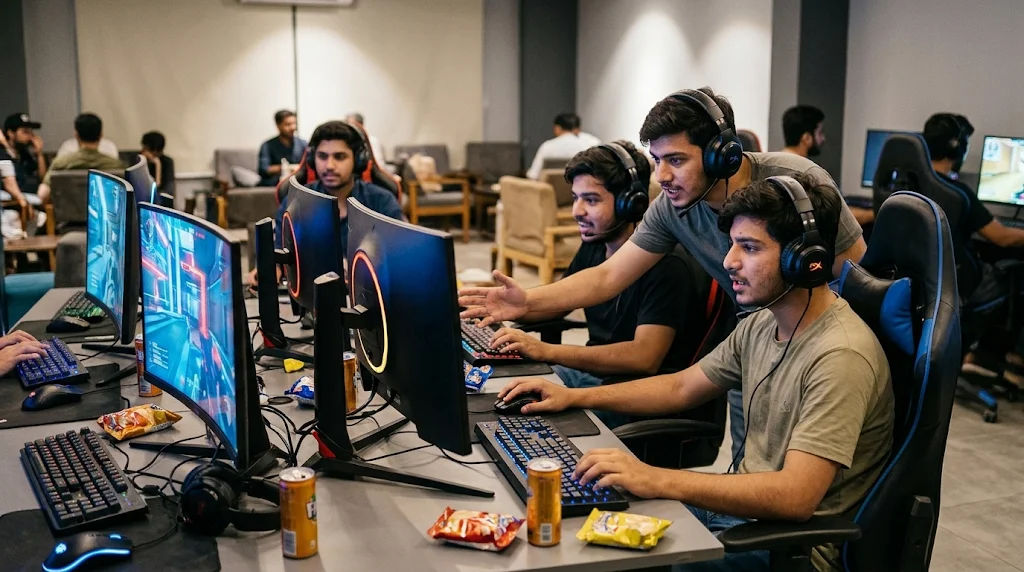
Understanding how PC gaming works is important for beginners who want to explore this form of entertainment. From computer hardware and software to internet connections and gaming platforms, several components work together to create an enjoyable experience. Whether someone enjoys action, adventure, racing, strategy, or online games, a computer provides different opportunities to explore interactive entertainment.
PC gaming is not limited to expensive computers or professional players. Many beginners start with ordinary desktop computers or laptops and gradually improve their equipment as their interests develop. Learning about the basic requirements, software, controls, and performance settings can help anyone understand how gaming on a PC works.
Basics of PC Gaming
PC-gaming betyder at spille videospil på en personlig computer i stedet for at bruge en dedikeret spillekonsol. Computeren behandler spillets instruktioner, viser billeder på skærmen og reagerer på spillerens kommandoer via tilsluttede inputenheder. Platforme som OPEN88 kan også indgå i den digitale spiloplevelse.
Det måles almindeligvis i millisekunder (ms). Lavere latenstid betyder generelt hurtigere kommunikation og mere responsivt multiplayer-gameplay.
A gaming PC can be a desktop computer or a laptop. Both options can support different gaming experiences, depending on their hardware specifications.
Desktop computers are popular because they usually offer better upgrade opportunities. Players can replace individual components, install additional storage, and improve cooling systems.
Gaming laptops provide portability. They combine essential computer components into one compact device, making them convenient for people who want to play games in different locations.
How a Computer Runs a Game
Every PC game requires certain instructions and resources to operate. When a player launches a game, the computer's operating system loads the necessary files into memory.
The processor handles calculations and instructions, while the graphics card generates the images displayed on the screen. Memory temporarily stores information that the game needs to access quickly.
These components work together continuously while the game is running.
For example, when a player moves a character, the computer processes the input, calculates the character's new position, updates the environment, and displays the result.
This process happens very quickly, creating the interactive experience that makes gaming enjoyable.
The Role of Gaming Software
Hardware alone cannot provide a complete gaming experience. Games also require software that tells the computer what to display and how to respond to player actions.
Gaming software includes the game itself, supporting applications, graphics drivers, and operating system services.
Developers create games using programming languages, graphics tools, sound systems, and game engines. These technologies allow computers to display environments, characters, animations, and interactive features.
Essential Hardware Components for PC Gaming
A computer's hardware determines how effectively it can run different games. Some games require basic specifications, while others need more powerful components.
Understanding the major hardware components helps beginners select a suitable computer.
Central Processing Unit (CPU)
The CPU is commonly described as the brain of a computer. It processes instructions and performs calculations required by the operating system and games.
In gaming, the processor manages important activities such as character movements, artificial intelligence, physics calculations, and background tasks.
A modern multi-core processor can handle several tasks simultaneously. This is especially useful when playing demanding titles or running additional applications.
A suitable CPU helps maintain smooth gameplay and reduces performance problems.
Graphics Processing Unit (GPU)
The graphics processing unit is one of the most important components for gaming.
It creates the visual information displayed on the monitor, including textures, lighting, shadows, reflections, and three-dimensional environments.
A powerful GPU can produce detailed graphics and support higher resolutions. It can also improve frame rates in demanding games.
Beginners should consider their preferred games and monitor resolution before choosing a graphics card.
Not every player needs an expensive GPU. Less demanding games can often run comfortably on computers with integrated graphics.
Random Access Memory (RAM)
RAM temporarily stores information that the computer needs while running programs.
Games use memory to access important information quickly, including textures, maps, character data, and other resources.
Insufficient RAM may cause slowdowns, loading problems, or interruptions when several applications are running.
The appropriate amount depends on the game's requirements and the computer's overall workload.
Storage Devices
Storage is where games, applications, operating systems, and personal files are saved.
There are two common storage options:
-
Hard Disk Drive (HDD): Uses mechanical components to store information and generally offers affordable storage capacity.
-
Solid State Drive (SSD): Uses flash memory and provides faster loading and file access.
An SSD can significantly reduce game loading times. It also helps the operating system start more quickly.
Players who install several large games should consider having enough storage space for future updates.
Motherboard and Power Supply
The motherboard connects the computer's major components. It allows the processor, memory, graphics card, storage, and other devices to communicate.
The power supply provides electricity to the different components.
A reliable power supply is important because unstable or insufficient power can affect system performance and reliability.
How Gaming Controls Work on a PC
PC gaming offers different ways to control characters, vehicles, and other activities.
Players can select their preferred input devices according to the game and personal comfort.
Using a Keyboard
The keyboard is one of the most common gaming input devices.
In many games, the WASD keys control character movement. Other keys may be assigned to jumping, interacting with objects, opening menus, or selecting equipment.
Keyboard controls can be customized in many games.
This flexibility allows players to create layouts that suit their preferences.
Using a Gaming Mouse
A gaming mouse provides precise movement and clicking.
In first-person games, mouse movement often controls the direction in which a character looks. In strategy games, players use the mouse to select units, manage resources, and interact with menus.
Some gaming mice include additional buttons that can be assigned specific functions.
Sensitivity settings also allow players to adjust how quickly the pointer or camera responds to movement.
Connecting a Gaming Controller
Not every game is designed primarily for keyboard and mouse controls.
Racing, sports, fighting, and platform games may feel more comfortable with a controller.
Many modern controllers connect through USB or Bluetooth. Some are supported automatically, while others may require additional software or configuration.
The choice depends on the game and the player's preferred control method.
Understanding How Online PC Gaming Works
Online gaming allows players to connect with other people through the internet. Instead of playing entirely against computer-controlled characters, users can participate in shared gaming environments.
These experiences include multiplayer competitions, cooperative missions, virtual worlds, and team-based challenges.
Internet Connection Requirements
A stable internet connection is important for multiplayer gaming.
The computer sends information to a game server, which processes player actions and shares updated information with other connected users.
Internet speed matters, but connection stability is also important.
A reliable broadband connection or properly configured Wi-Fi network can provide a better experience.
Players should avoid unnecessary downloads and network-heavy activities while playing competitive multiplayer titles.
Understanding Game Servers
Game servers coordinate multiplayer activities.
They receive information from connected players, process events, and distribute updates to everyone participating in a session.
For example, when one player moves through a multiplayer environment, the server communicates the relevant information to other players.
This helps maintain a shared gaming experience.
Some games use dedicated servers, while others use different networking arrangements.
What Is Gaming Latency?
Latency refers to the time information takes to travel between a computer and a game server.
It is commonly measured in milliseconds.
High latency can make controls feel delayed. This is especially noticeable in fast-paced multiplayer games.
Choosing a geographically closer server, using a stable internet connection, and avoiding unnecessary network activity can help reduce connection problems.
Gaming Platforms and Digital Game Stores
PC players can access games through different digital platforms.
These services provide game libraries, downloads, updates, account management, and multiplayer features.
Digital Game Distribution
Digital stores allow players to purchase or download games directly onto their computers.
Instead of buying physical discs, users access games through their accounts.
Most platforms provide automatic updates, installation management, and cloud-related features.
Some also offer free-to-play titles, allowing beginners to explore gaming without purchasing every game.
Game Launchers
A game launcher is software used to install, organize, and start games.
It may also provide additional services such as:
-
Automatic game updates.
-
Friends lists and messaging.
-
Achievement tracking.
-
Cloud saves.
-
Multiplayer access.
-
Game library management.
Using official platforms can also make it easier to manage purchased games and receive security updates.
How PC Graphics and Performance Work
Visual quality is an important part of modern gaming. Computers use different graphical technologies to create realistic environments and smooth animations.
However, better graphics often require more processing power.
Understanding Resolution
Resolution describes the number of pixels displayed on a monitor.
Common gaming resolutions include:
-
1920 × 1080 pixels (Full HD).
-
2560 × 1440 pixels (Quad HD).
-
3840 × 2160 pixels (4K).
Higher resolutions provide more visual detail but generally require additional GPU performance.
Beginners should choose a resolution that matches their graphics card and monitor.
Understanding Frame Rates
Frame rate refers to how many images a computer displays each second.
It is measured in frames per second (FPS).
For example, 60 FPS means the screen displays approximately 60 frames every second.
Higher frame rates can make movement appear smoother, especially in fast-paced games.
However, actual performance depends on the game's requirements, hardware capabilities, and graphics settings.
Adjusting Graphics Settings
Most PC games provide graphics options that allow players to balance visual quality and performance.
Common settings include:
-
Texture quality.
-
Shadow quality.
-
Anti-aliasing.
-
Lighting effects.
-
View distance.
-
Resolution scaling.
-
Motion effects.
Reducing demanding settings can improve performance on less powerful computers.
Players should experiment with these options rather than automatically selecting the highest settings.
Installing and Setting Up PC Games
Before playing a game, users generally need to install it and complete some basic configuration.
The process is straightforward when using an official gaming platform.
Checking System Requirements
Every PC game has minimum and recommended system requirements.
Minimum requirements describe the hardware needed to run the game under supported conditions.
Recommended requirements indicate a more suitable configuration for a better experience.
Players should compare their computer's processor, graphics card, RAM, operating system, and available storage with the published requirements.
This prevents unnecessary purchases and installation problems.
Downloading and Installing Games
After selecting a game, players can download its installation files through an official store or developer platform.
The launcher usually handles the installation process automatically.
Once installation finishes, the game may download additional updates or supporting files.
A stable internet connection and sufficient storage space make this process easier.
Updating Graphics Drivers
Graphics drivers help the operating system communicate with the graphics card.
Manufacturers regularly release driver updates that may improve compatibility, fix errors, and support newer games.
Players should download drivers through official manufacturer applications or websites.
Keeping drivers updated can help maintain system reliability.
Different Types of PC Gaming Experiences
PC gaming covers many genres, offering something for different interests and playing styles.
Understanding these categories can help beginners decide what they want to explore.
Action and Adventure Games
Action games focus on movement, challenges, timing, and player reactions.
Adventure games often emphasize exploration, storytelling, and discovering new environments.
Some titles combine both genres, allowing players to experience interactive stories with challenging activities.
Strategy Games
Strategy games require planning, decision-making, and resource management.
Players may build cities, manage teams, develop civilizations, or compete against computer-controlled opponents.
These games often reward patience and thoughtful decisions.
Racing and Sports Games
Racing games simulate vehicle competitions and driving experiences.
Sports games allow players to participate in digital versions of activities such as football, basketball, and other competitive sports.
Many of these games support controllers, making them comfortable for beginners.
Multiplayer and Cooperative Games
Multiplayer games connect several players through shared sessions.
Some focus on competition, while others encourage teamwork.
Cooperative experiences allow friends to complete missions, solve challenges, and achieve shared objectives.
Tips for Improving Your PC Gaming Experience
A good gaming experience depends on more than purchasing powerful hardware.
Proper computer maintenance, comfortable settings, and responsible usage also matter.
Keep Your Computer Clean
Dust can collect around fans and ventilation areas, affecting airflow.
Regularly cleaning external surfaces and maintaining clear ventilation can help prevent unnecessary heat buildup.
Always follow manufacturer guidance when cleaning computer components.
Manage Background Applications
Running too many applications simultaneously can consume system memory and processing power.
Closing unnecessary programs before starting a demanding game may improve performance.
However, essential security software and system services should remain active.
Monitor Computer Temperature
Gaming components generate heat during demanding tasks.
Proper ventilation and functioning cooling systems help maintain suitable operating temperatures.
If a computer becomes unusually hot or noisy, users should investigate the cooling system and consult a qualified technician when necessary.
Choose Comfortable Gaming Accessories
A suitable monitor, keyboard, mouse, and chair can make gaming sessions more comfortable.
Players should arrange their equipment to maintain a relaxed posture.
Taking regular breaks and adjusting screen brightness can also support a more comfortable experience.
Common PC Gaming Problems and Their Solutions
Beginners may experience technical problems when starting PC gaming.
Understanding common issues makes troubleshooting easier.
Games Running Slowly
Slow performance can result from insufficient hardware resources, demanding graphics settings, background applications, or outdated drivers.
Checking system requirements and adjusting graphics options are useful first steps.
Players should also make sure that their computers have sufficient available storage.
Games Crashing Unexpectedly
Crashes may occur because of software conflicts, corrupted files, incompatible drivers, or hardware problems.
Verifying game files through the official launcher can sometimes resolve installation-related issues.
Installing reliable updates and checking system compatibility may also help.
Internet Disconnection
Multiplayer games depend on stable network communication.
Disconnections may result from router problems, weak Wi-Fi signals, service interruptions, or unstable connections.
Restarting network equipment and checking the internet service can help identify the cause.
Audio and Display Problems
Missing sound, incorrect screen resolution, and display interruptions can affect gameplay.
Checking audio output settings, monitor connections, and graphics configuration is a good starting point.
Users should also confirm that the correct display and sound devices are selected in their operating system.
Is PC Gaming Suitable for Beginners?
Yes, PC gaming can be suitable for beginners because it offers different levels of complexity and hardware requirements.
A person does not need an expensive gaming setup to begin exploring computer games.
Many titles work on standard laptops and desktop computers.
Beginners can start with less demanding games, understand the controls, and gradually explore more advanced experiences.
Learning basic computer maintenance and game settings also builds useful technical knowledge.
The most important consideration is selecting games that match the computer's capabilities and personal interests.
The Future of PC Gaming
PC gaming continues to develop as computer hardware, software, and internet technologies improve.
Modern graphics cards support advanced visual effects, while faster processors help handle increasingly complex game environments.
Cloud gaming is another developing area. It allows supported games to run on remote servers while players receive the video stream through their devices.
This approach may reduce the need for powerful local hardware, although performance depends on internet quality and service availability.
Virtual reality is also creating new opportunities for interactive gaming.
These technologies demonstrate how computer gaming continues to expand beyond traditional keyboard-and-mouse experiences.
Conclusion
Gaming on a PC works through the combined performance of computer hardware, gaming software, input devices, and, when required, an internet connection. Each component has a specific responsibility, but all of them work together to create an interactive entertainment experience.
The processor handles instructions and calculations, the graphics card produces visual information, and RAM provides temporary storage for important game data. Meanwhile, the monitor displays the results, and devices such as keyboards, mice, and controllers allow players to interact with the game.
Understanding these components helps beginners make informed decisions when choosing a gaming computer. It also makes troubleshooting easier because players can identify whether a problem relates to hardware, software, graphics settings, or network connectivity.
PC gaming offers considerable flexibility. Players can customize their controls, adjust graphics settings, install different gaming platforms, and upgrade their computers as their requirements change. They can also explore single-player adventures, competitive multiplayer experiences, strategy challenges, and cooperative entertainment.
A successful gaming setup does not always require the most expensive equipment. Choosing compatible hardware, maintaining updated software, managing computer temperatures, and using a stable internet connection are practical ways to improve performance.
Ultimately, PC gaming provides an accessible and customizable way to enjoy digital entertainment. By understanding how the different components work together, beginners can develop confidence, select suitable games, and enjoy a smoother and more rewarding gaming experience.

 quadro_bike